



You’re helping churchgoers and church leaders alike encounter true healing in Jesus
By Elisabeth Trefsgar
Photos by Taylor Fedena
One ordinary Sunday, you sit in the church pew, listening to your pastor preach.
The open Bible on your lap feels more like a weight than a lifeline. You can’t seem to focus on the words, and you can’t catch a glimpse of the hope you’re supposed to find in its pages. Instead, your heart is heavy with pain.
You can’t see it, but the pews are full of other people who are hurting too. The causes vary: a tragic loss, a long-term addiction, a heartbreaking family conflict. But the symptoms are the same.
In your suffering, you all feel far away from the people around you—and even farther away from God.
Now, imagine what this congregation looks like from the pulpit.
Your pastor knows that some people in the pews are hurting, and suspects that many more—like you, perhaps—are suffering in silence. But how can the church help?
Today, many Christian leaders feel poorly equipped to minister to people in their pain. That’s especially true in the United States, where churches tend to emphasize the Bible’s most hopeful and positive messages. But when people can’t hear a message of hope through the noise of their pain, it’s a daunting task to help them grow in faith.
And with many church leaders shouldering heavy burdens of physical, emotional, and spiritual burnout, the mission of helping others heal can sometimes feel impossible.
That’s what you’re helping to change— church by church, across the United States. Through our Restoring Hope ministry, you’re equipping the church to respond to people’s pain with hope grounded in God’s Word.
Finding Christ in the Middle of Pain
The need is real.
Approximately 60 million Americans attend a church on any given Sunday. That number spans ages, cultural backgrounds, races, and denominations. It represents small-town churches with faithful congregations of dozens and large churches that welcome thousands each week.
But according to church partners we visited this year, there’s one thing that all these 60 million Americans bring to church: their pain.
“Not everyone has a trauma due to some atrocity that life brings, but everyone sitting in the pew has experienced pain,” says Pastor Kim Gegner of New Hope Ministries in Roslyn, PA. “From the youngest children to the oldest person in the pew, that’s our universal. That’s what brings us all together.”
Whether life-changing trauma or everyday stress, emotional suffering is a matter of spiritual concern. And if pain is compounded by stigma or seen as something that should be left at the church door, people often keep their pain to themselves—even when they’re seasoned church leaders.
“All of my life, I’ve been in Christian circles,” says Pastor Kim. “But I was never taught that the church could heal.”
Over time, the burdens we carry can keep us from growing closer to God or finding community in the church.
“Unresolved pain will hold anyone back,” says Pastor Reina Olmeda of Transformation Church in Allentown, PA. “You can’t clearly see the love of God. You can’t receive a sermon of hope. It’s very difficult to hear what’s coming from the pulpit when there is this barrier of pain.”
The Bible is full of stories that reflect this reality. In Exodus, the Israelites are so broken by generations of slavery that they cannot hear God’s promise of deliverance from Moses (Exodus 6:9).
While Job remains faithful amid his grief, his lament includes vivid images of being attacked and abandoned by God (Job 16).
In Psalm 22, David asks why he has been forsaken by God and describes how his pain affects him physically, emotionally, and spiritually. And in his agony on the cross, Jesus echoes David’s words: “My God, my God, why did you abandon me?” (Matthew 27:46).
“We have a suffering Savior—a Savior who experienced our pain,” says Pastor Steve Brubaker of Grace Community Church in Willow Street, PA. “If my job as a pastor is strictly to alleviate pain, I’m on the wrong track. I want to be able to find Christ in the middle of pain, and then encourage others that you can live through this and even grow closer to the Lord.”
Our Savior’s suffering is the reason healing is possible. He knows our hearts and carries our burdens. And through him, we have the promise of present comfort and future glory.
When we’re in the middle of suffering, this is the message we need.
Bearing One Another’s Burdens
Restoring Hope aims to equip every Christian leader in the United States to proclaim this message of hope to everyone whose heart is heavy.
The idea is that, with the right pastoral tools, every church can become a safe place for people to bring their pain to Jesus in all the challenging seasons of life—from disaster and trauma to everyday stress, worry, anger, or sadness.
This ministry expands on the proven methods of American Bible Society’s Trauma Healing Institute (THI), which has helped people heal from trauma and recover from disaster in 153 countries worldwide.
Developed and refined over 25 years, the THI approach combines mental health practices with the wisdom of Scripture to help people and communities thrive.
“We know that our Bible-based method is effective,” says Rebecca Taguma, Senior Director of THI and Restoring Hope at American Bible Society. “And not just in times of crisis, but in all of life’s challenging seasons. That’s why our ministry is expanding beyond acute trauma to help people with all kinds of pain and hurt. Our role is to help your church become a place where people can flourish, grow, and meet Jesus in new and transformative ways.”
Church leaders who have tried it say the program is already making a difference.
“The Restoring Hope program itself is very simple, but it’s based on a lot of profound thinking around the issue of pain and suffering,” Pastor Steve says. “It’s biblically based, but it’s counseling astute, and they’ve integrated those two things very well. We’ve never come across a program like this.”
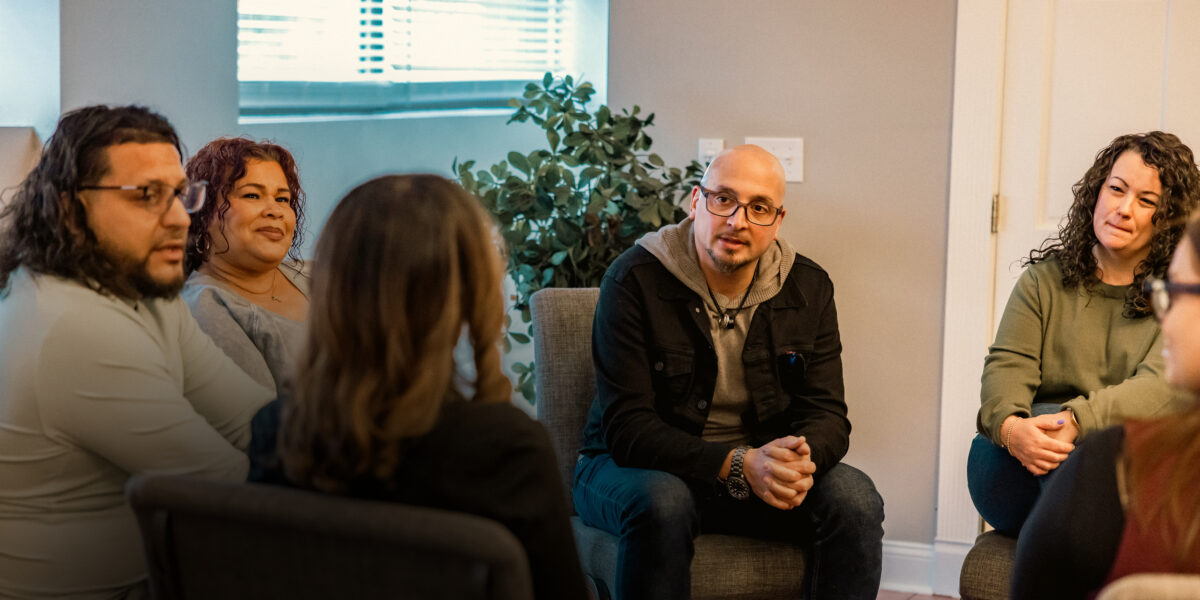
At the heart of this ministry are small group Bible studies led by a trained facilitator that walk through the program together. It’s a format that’s familiar to most churches, but with proven tools to guide people through conversations about pain and suffering with the wisdom of Scripture. Each group travels through lessons that help them identify and voice their pain, bring their suffering to the cross, and move forward in the light and joy of Christ’s love.
Through Restoring Hope groups, churches become communities where people help bear each other’s burdens (Galatians 6:2).
“When you’re in pain, the tendency is to withdraw physically, emotionally, and even to move away from God,” says Pastor Reina. “When people are in pain, they need a sense of community. Through the groups, they receive that. Through the groups, they realize, ‘I am not alone in my struggle. . . .’ The groups, to me, are one of the best resources that we have offered our church.”
“It’s Miraculous”
What’s it like to walk through a healing group journey?
At first, church leaders say, you might be apprehensive or confused about what to expect. Pastor Kim remembers leading a teen healing group for students struggling with drug abuse in the school connected with her church. For the first couple meetings, the teens didn’t want to talk at all.
This initial silence is common—along with other markers of pain, trauma, and isolation. Some people struggle to look others in the eye. Some feel the weight of cultural stigma against vulnerability and avoid showing any emotion. But as the group explores what God has to say about their suffering, something shifts.
“You’re hearing a biblical story, which really connects you with people from the Bible and humanizes them,” says Pastor Reina. “It allows for you to step back and reflect and talk about how that resonates.”
As you hear these stories, you might start making connections of your own. People of different ages, life paths, and experiences begin sharing how they see their pain in the light of God’s Word. Many times, this opens the door for you to share, too.
It’s this process that helps people bring their burdens to Jesus and find a way to continue growing in the community the church provides. And while a typical Restoring Hope healing group only meets for six sessions, church leaders see healing and resilience that endures.
Pastor Kim watched the teens she led through the healing group become more open as their journey progressed. Since then, the school hasn’t reported any new drug abuse. In addition, she’s seen young people in her church take ownership of their faith as they learn how the Bible connects to their lives.
“I think Restoring Hope is the best thing I’ve ever seen to help people understand why their faith is relevant,” she says. “It’s miraculous, and I put that directly to the healing groups and what they do.”
Pastor Steve remembers church members telling him that their pain felt less daunting after sharing their stories for the first time in a healing group. And Pastor Reina has seen how healing groups have changed the way people approach their role in the body of Christ.
“People may have walked in thinking, ‘I have too much hurt to be part of anything,’” she says. “After the group, they ask me, ‘How can I serve the church now?’ God’s Word restored something, and now the way they view life and their purpose and their effectiveness for the kingdom has completely changed. It’s God’s Word, restoring hope, moving them forward to the future. It’s powerful!”
“It Was Like Having New Eyes”
Restoring Hope is making a life-changing difference for people in the pews—but it’s for people in the pulpits, too.
Research shows that seven out of every ten U.S. church leaders are themselves bearing wounds of trauma. Beyond acute trauma, pastors report worse physical, mental, and emotional health than the American public overall, and significantly more suffering than other practicing Christians.
But pastors using Restoring Hope in their churches are realizing that their pain matters.
Pastor Steve remembers going through a church split that nearly broke him decades ago.
“It was the most painful thing I experienced, barring losing a family member,” he says. He lost friends, mentors, his job, and his sense of direction for the future. But he didn’t fully process his pain until his church piloted the Restoring Hope program. Participating in it changed everything.
“It was like having new eyes,” he says. “I didn’t realize how much I was being weighed down by not addressing this in my own life, this pain I was carrying.”
As church leaders heal, they’re better equipped to lead their congregations and become powerful ambassadors of Christ’s healing in their communities.
“It’s something that pastors have been clamoring for,” Pastor Reina says. “We want the resources; we want to talk about this.” With tools from Restoring Hope, now they can.
You Are Comforting God’s People!
Through your support of American Bible Society, you’re fulfilling God’s command to “comfort my people” (Isaiah 40:1).
Restoring Hope is helping people in pain experience the healing, joy, and hope of Jesus through his Word. Now, church leaders see an opportunity to invite more people to meet the Savior who walks beside us in our suffering, every step of the way.
“If you’re in the process of healing, there’s a great sense of hope,” Pastor Reina says. “You see a church that is stronger, a church that is connected. A healthy church is a thriving church, and a thriving church is a growing church.”
Imagine thriving, growing churches across our nation—full of people who have trusted Jesus and are sharing his message of love.
Because of you, we can continue to equip churches with Bible-based tools like Restoring Hope, and we look forward to seeing what God does with your life-giving gift. Thank you!
Learn more about the ministry you make possible: AmericanBible.org/Restoring Hope
See the difference you made in these churches: ABS.Bible/Hope
Read more stories in our full magazine here!
